Updated Jan 10, 2026
If you love desert landscapes, wide-open skies, and the kind of peace that makes your soul quiet: Joshua Tree National Park will be a perfect place for you to explore.
It’s wild, beautiful, sometimes windy, and always unforgettable. Whether you’re planning your first solo road trip or a weekend getaway with friends, this desert wonderland is the perfect mix of adventure, calm, and pure magic.
On this blog post, I am happy to share the Complete Travel Guide to visit Joshua Tree National Park 2026. This guide will walk you through everything I learned from my solo trip: from what to pack, where to stay, best photo spots, and how to make the most of your time there.
Why Joshua Tree Is So Special
There’s something special about Joshua Tree.
The park is where the Mojave and Colorado deserts meet: two totally different ecosystems blending into one landscape filled with weirdly beautiful rocks, spiky Joshua trees, bright full moon and endless stars at night.
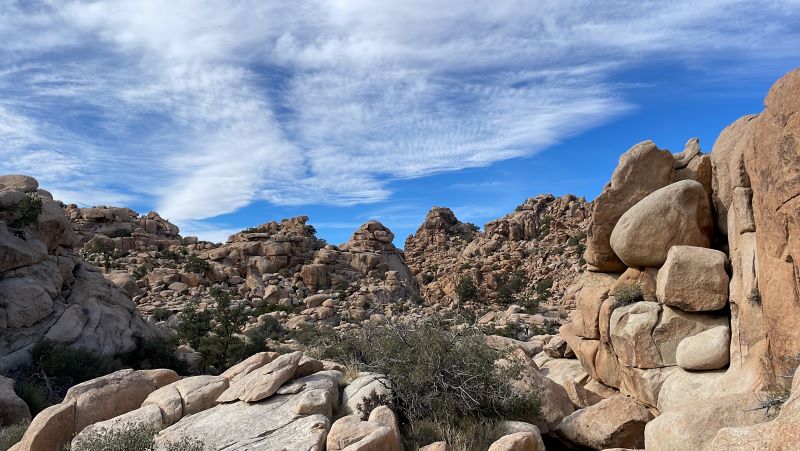
It’s also one of the most photogenic national parks in California. Every direction looks like a movie scene: golden boulders stacked like puzzle pieces, twisted trees reaching to the sky, and sunsets that paint the desert in pink and orange tones.
But what makes Joshua Tree really special isn’t just its beauty, it’s how peaceful it feels.
Out there, there’s no city noise, no rush, just stillness. You breathe differently. You think differently. It’s the kind of place that reminds you how small you are and how big the world really is. And hiking is one of the best ways to experience the park.
How to get to Joshua Tree National Park
Joshua Tree National Park is about:
- 2.5 hours from Los Angeles
- 3 hours from Orange County
- 3 hours from San Diego
- 4 hours from Las Vegas
There are three main entrances:
- West Entrance (Joshua Tree town) – This is the most popular entrance and closest to restaurants, coffee shops, and art galleries. I used this entrance for my trip.

- North Entrance (Twentynine Palms) – Great if you’re visiting from Las Vegas or staying in town nearby.
- South Entrance (Cottonwood) – Quieter and connects to I-10 freeway, good for a scenic exit.
Tip: Cell service is limited inside the park. Download offline maps from Google Maps or the NPS app before you go.
- Day Pass: $30 per vehicle
- Annual Pass: $55
- America the Beautiful Pass: $80 (provides access to all national parks for one year)
- Joshua Tree Visitor Center: located in the town of Joshua Tree, one block south of Highway 62 on Park Boulevard. (I visited this visitor center for my trip)
- Joshua Tree Cultural Center: located at 6533 Freedom Way in Twentynine Palms
- Cottonwood Visitor Center: located at Cottonwood Springs, 8 miles north of I-10.
- Black Rock Nature Center: next to Black Rock campground
When to Visit Joshua Tree
Timing is important when planning this trip. Summers are very hot, with daytime temperatures reaching 100°F and nighttime temperatures dropping below 70°F.
I went in January (winter), and the weather was cool and windy during the day but very cold at night. Winter days are cool (around 60°F). It was less crowded, but cold at night. Prepare to bring layers and blankets for camping.
The best time to visit is in early spring (March, April) or late fall (October, November), but be aware that these are the most crowded times.
- Spring (March–May): Best season! Wildflowers bloom and temperatures are perfect.
- Fall (October–November): Cool days, crisp nights, ideal for camping.
- Winter (December–February): Cold nights but peaceful. Fewer crowds.
- Summer (June–August): Very hot! Daytime temps over 100°F, not ideal for hiking.
Where to Stay in Joshua Tree
You have three main options: campgrounds, car camping, or staying outside the park. I have written a full article how to book campground here.
Inside the Park
Here are the main campgrounds:
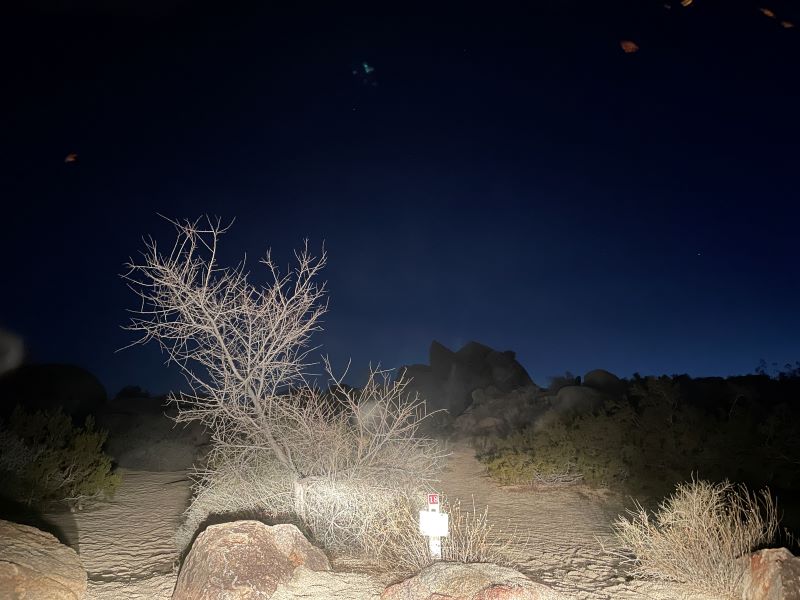
- Jumbo Rocks Campground is my favorite: 124 sites, fee $30/ night. It has huge rocks, great sunrise and sunset views, and is easy to access. Book early because it fills up fast! I booked this campground last minute on a weekday, and there were only a few spots left. If you plan to visit on a weekend, please book ahead.
- Hidden Valley Campground: 45 sites. Very popular with rock climbers. First-come, first-served and scenic.
- White Tank Campground: 15 sites. Small and quiet, close to Arch Rock Trail. First come, first serve
- Belle Campgrounds: 18 sites. Fee $30. Smaller and peaceful, less crowded.
- Ryan Campground: 31 sites. Fee $30
- Black Rock Campground: 99 sites, near Yucca Valley. Fee $35/ night
- Indian Cove campground: 101 sites, 13 group sites. Fee $35/ night
- Cottonwood Campground: 62 sites, 3 group sites. Fee $35/ night
Pro Tip: Book through Recreation website. Reserve early during spring and fall, they’re the best seasons to visit.
Car Camping is Fun choice
If you love freedom and flexibility, car camping is perfect. I slept in my SUV at Jumbo Rocks. It felt safe, peaceful, and surprisingly cozy (just cold at night, bring extra blankets!). Read more about what to shop and prepare for your first car camping trip here.
I used an trifold mattress, warm blanket, pillow, and window covers for privacy.

If you don’t want to sleep inside the park, there are plenty of options in Joshua Tree town and Twentynine Palms: from cute Airbnbs to budget motels.
Outside the Park:
Hotels & Lodging in the towns: just outside the park along highway 62.
Hazards in Joshua Tree You Should Know
- Remember to drink plenty of water, eat salty snacks, use sunscreen, and be safe on the trail to avoid dehydration and heat-related illnesses.
- Pay attention and be cautious of rattlesnakes and scorpions.
- Use extreme caution when you are near old mines.
- Avoid canyons and washes when it rains due to the risk of flash floods.
Best Photography Spots
Here are my favorite photo spots from my solo trip:
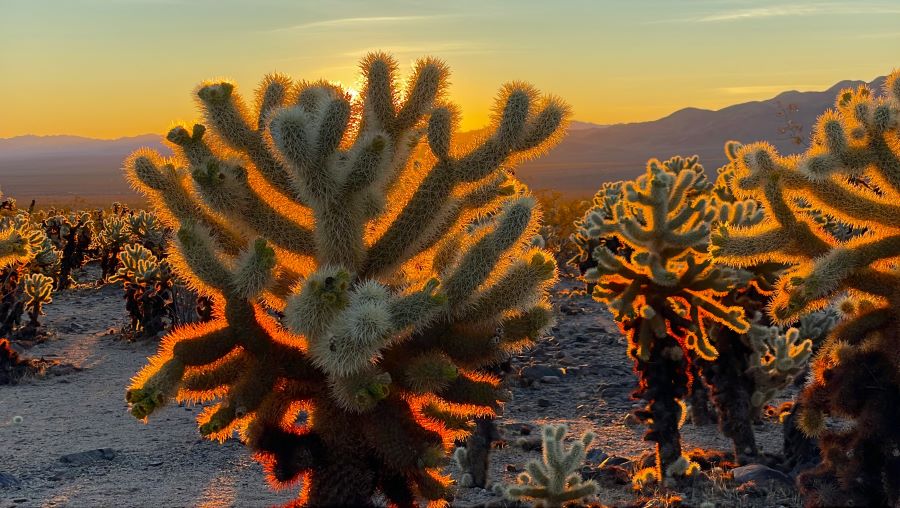
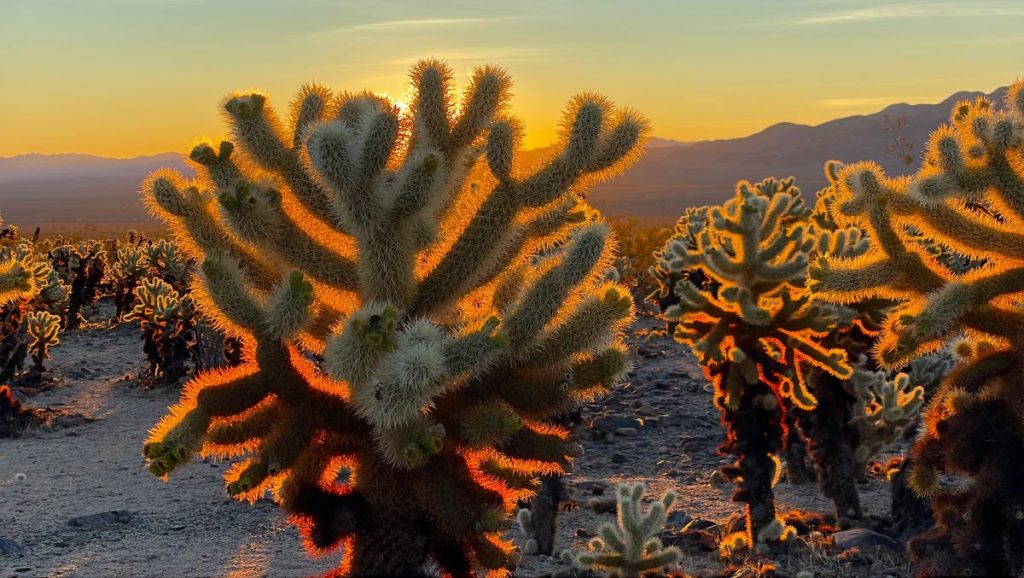
- Cholla Cactus Garden (Sunrise & Sunset): The golden light hits the cacti, and they glow like little lanterns. It’s magical.
- Quail Springs Picnic Area (Sunset): I saw photographers capture wedding photography here.
- Cap Rock (Sunset)
- Rattlesnake Picnic Area (Sunset)
- Arch Rock: A short trail and super photogenic. Come early in the morning to avoid crowds.

- Heart Rock: A secret spot near Arch Rock. It’s literally shaped like a heart, perfect solo photo moment.
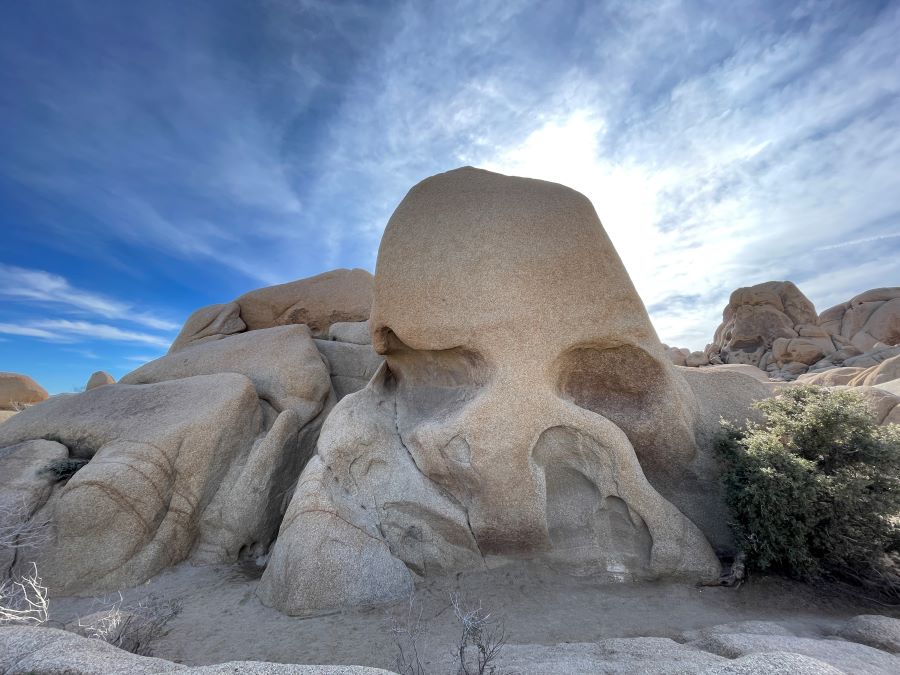
- Skull Rock: Iconic rock formation right by the road. Great for sunset light.

- Keys View: Breathtaking panoramic view of the Coachella Valley. Very windy but worth it!
- Hidden Valley Trail: One-mile loop surrounded by massive rock formations. Easy and fun to explore.
- Jumbo Rocks: You can’t take a bad photo here. Sunset and sunrise are both incredible.
12 Best Rock Formations You Should See in Joshua Tree
These rock formations can be seen from the parking area, or require a short hike
- Split Rock Trailhead: this loop trail 2.5 mile hike with 150 feet of elevation gain
- Face Rock
- Skull Rock
- Elephant Rock near Skull Rock
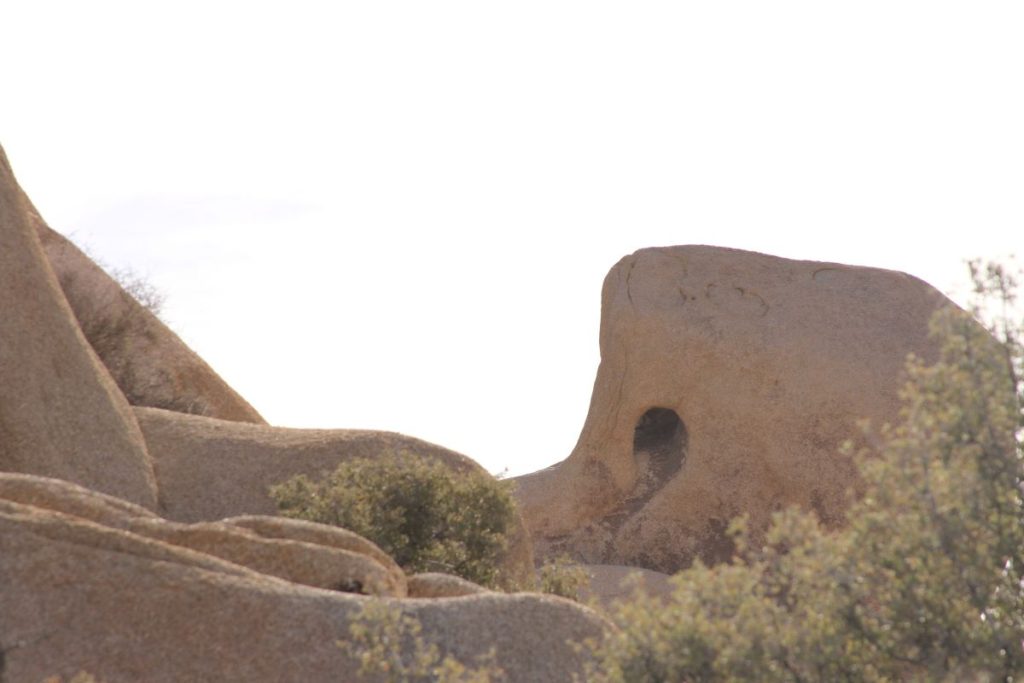
- Cap Rock
- Hall of Horrors
- Cyclops Rock
- Heart Rock
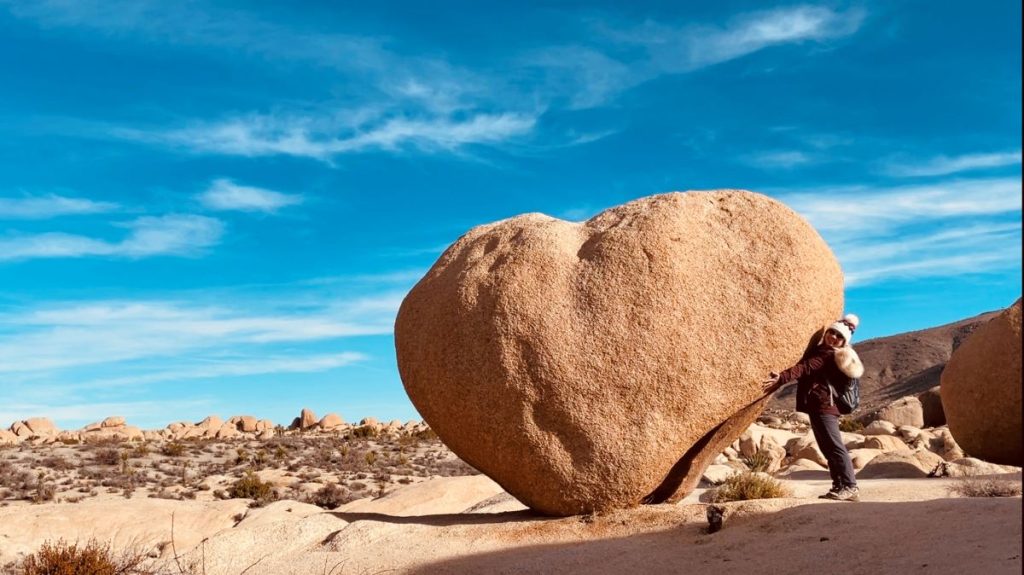
- Arch Rock and Twin Tanks Trailhead
- Whale Rock
- Intersection Rock
- Cow Rock
10 Desert Plants You Should See in Joshua Tree
- Oasis of Mara
- Fortynine Palms Oasis
- Lost Palms Oasis
- Cottonwood Spring
- Quail Springs Picnic Area
- Cap Rock
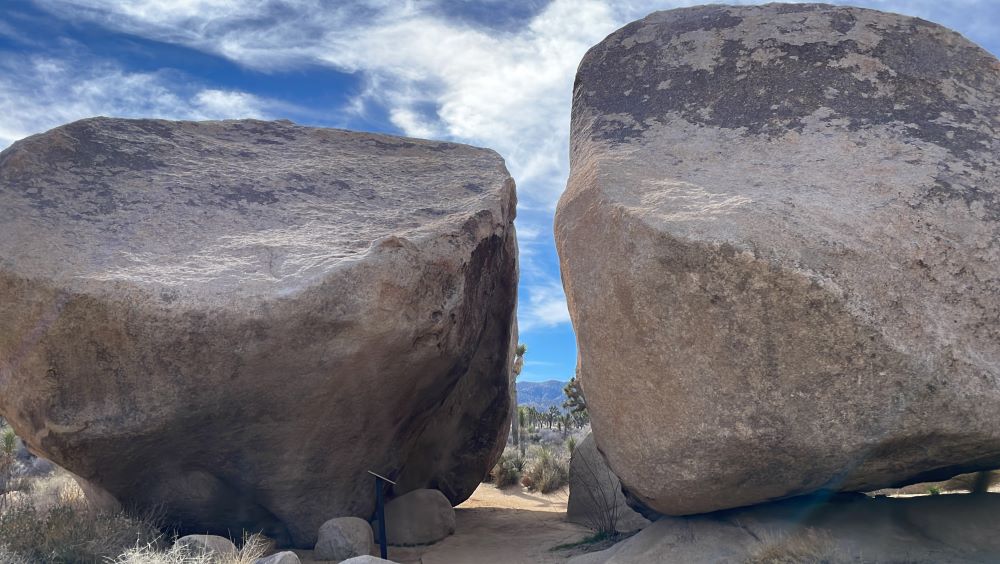
- Live Oak Picnic Area
- Ocotillo Patch
- Cholla Cactus Garden
- Bajada Trailhead
Scenic Driving:
- Drive Park Boulevard: this scenic drive will take you to see a lot of Joshua Tree National Park in a few hours. You can see many highlights: Hidden Valley, Cap Rock, Ryan Mountain, Skull Rock, Keys View, Baker Dam, Cholla Cactus Garden and Cottonwood Spring.
- Backcountry Roads: require advanced planning and four-wheel drive vehicles.
Stargazing at Joshua Tree
There are 4 designated stargazing areas and 1 other recommendation in Joshua Tree National Park.
- Parking lots of Quail Springs
- Hidden Valley
- Cap Rock
- Ryan Mountain
- Pinto Basin (any pullout along Pinto Basin would be a great choice)
Stargazing Preparation:
- Red-tinted flashlight for safe walking in the dark.
- Check the weather for a clear sky.
- Check the moon. Full moons light up the landscape, obscuring most stars.
Rock Climbing
- Bouldering Near Barker Dam
- Echo T
- Hidden Valley Nature Trail
- Indian Cove
Best Hikes for Solo Travelers
If you’re hiking alone, pick well-marked trails.
Easy Hikes:
- Hidden Valley Trail (1 mile): Short loop, fun rock formations, and great for solo hikers. It takes about 30-60 minutes
- Barker Dam Trail (1.3 miles): Lovely desert scenery and sometimes you’ll see bighorn sheep. It takes 30-60 minutes
- Arch Rock Nature Trail (1.2 miles): Easy and scenic. Climb some rocks. It takes 45-90 minutes.
- Bajada Trail: Easy trail, about 15-30 minutes
- Cap Rock (0.4 mile) loop, it takes 15-45 minutes
- Skull Rock Loop (1.7 miles): Fun and full of weirdly shaped rocks. It takes about 1-2 hours
- Cholla Cactus Garden: Easy, it takes 15-30 minutes
- Cottonwood Spring: Short and easy, about 5-20 minutes
- High View (1.3 mile loop): about 1-2 hours
- Indian Cove (0.6 mile loop): easy, about 30-45 minutes
- Oasis of Mara (0.5 mile loop): easy, about 30-45 minutes
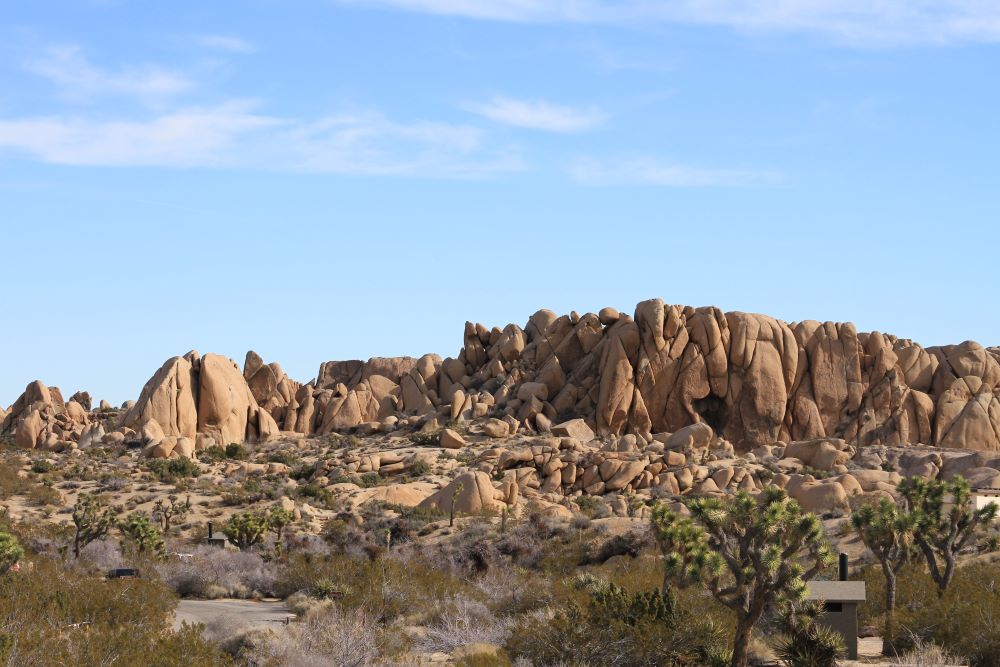
Moderate Hikes:
- Boy Scout Trail: It takes about 1-10 hours hike
- Minerva Hoyt Trail: 3 miles round trip with 100 feet of elevation gain. About 1-2 hours
- Mastodon Peak: 3 mile loop with 375 feet of elevation gain. It takes about 2-3 hours
- Wall Street Mill: 2 mile out and back, about 45-120 minutes
- Split Rock (2.5 mile loop trail with 150 feet of elevation gain). About 90-150 minutes
- Pine City Trail: moderate 4 mile out and back. About 2-3 hours
- West Side Loop: moderate 4.7 mile loop. About 2-3 hours
- Contact Mine Trail: 4 miles round trip with 700 feet of elevation gain. About 2-3 hours
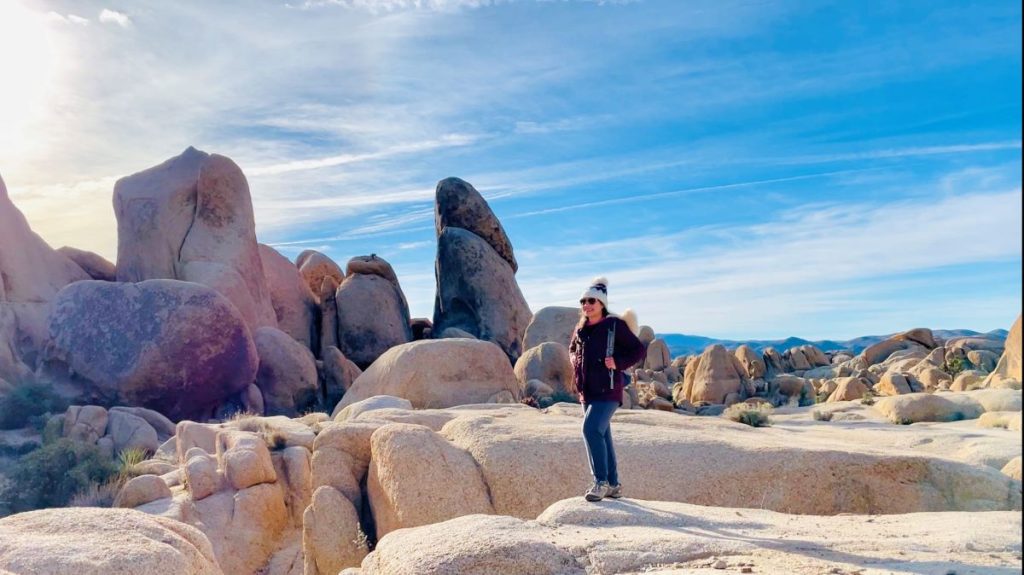
JOSHUA TREE, CA
Difficult Hikes:
- 49 Palm Oasis: 3 miles out and back with 300 feet of elevation gain. It takes about 2-3 hours
- Lost Horse Mine: 6.8 mile loop with 900 feet of elevation gain. It takes about 2-4 hours
- Panorama Loop Trail: 6.6 miles and over 1000 feet of elevation gain. About 3-5 hours
- Ryan Mountain Trail (3 miles round trip with 1,050 feet of elevation gain): More challenging but amazing 360° views at the top. Popular hike. It takes 2-3 hours.
- Lost Palms Oasis: 7.5 mile out and back with 500 feet of elevation. It takes about 4-6 hours
- Willow Hole: 7 miles roundtrip, 246 feet of elevation gain. About 3-5 hours
Always carry at least 2 liters of water, sunscreen, and a hat. Drink water even if you don’t feel thirsty; don’t wait until you’re dehydrated.
Safety Tips for Solo Travelers
Let’s be honest: traveling solo feels empowering but also scary sometimes.
Here are things that helped you feel safe:
- Share your location with family or use the Life360 app before you lose service.
- Carry pepper spray or a personal alarm.
- Trust your instincts: if a place feels off, leave.
- Avoid hiking in the dark or venturing too far off marked trails.
- Keep extra water in your car, battery jumper, and AAA membership.
- If you’re nervous sleeping alone in your car: park near other campers, not isolated areas.
Remember: confidence grows with each trip. You learn, you adapt, and you get stronger.
What to Eat & Bring
You won’t find many restaurants inside the park, so bring your own food.
My easy road trip food kit:
- Premade sandwiches or rice bowls
- Fruits (tangerines, apples, grapes)
- Trail mix and protein bars
- A lot of water to drink
- Bring extra washing water to wash your hands or do dishes. No water inside the park.
- Instant noodles or canned soup
- Cooler with drinks and snacks
- Electric food warmer (game changer!)
Outside the park, check out:
- Joshua Tree Coffee Company: cute café for morning brew
- Crossroads Café: breakfast and sandwiches
- Joshua Tree Saloon: good for dinner after a day of hiking
- Steak n Shake
Useful Apps for Your Trip
- NPS App: For park maps and trail info (download offline). Use this official NPS app for accurate information.
- iOverlander: Find campsites, rest stops, and showers.
- Roadtrippers: Plan your route and discover attractions.
- AccuWeather: Check desert temperatures and wind.
- HotelTonight: Find last-minute hotel deals if plans change.
A Few Things I Learned
- Preparation builds confidence. Once you’re ready, the fear quiets down.
- You don’t need everything perfect to start. You’ll learn along the way.
- Solo time isn’t lonely. It’s peaceful.
- Nature heals. Every rock and star felt like a friend.
- Trust yourself. You’ll surprise yourself with how capable you are.
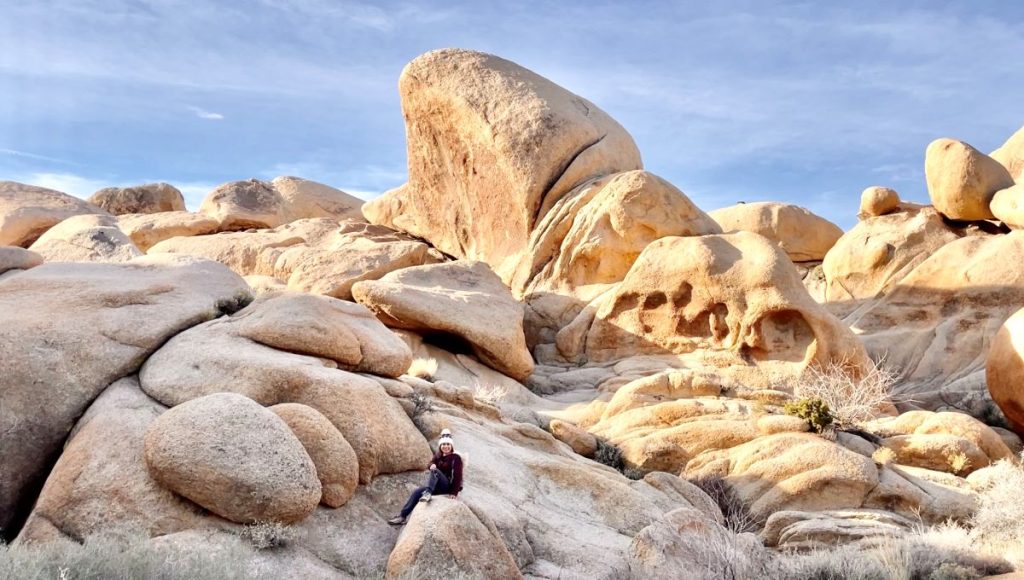
JOSHUA TREE NATIONAL PARK
A Little Inspiration for You
If you’re reading this and dreaming about your first solo trip, take this as your sign. You might feel scared, unsure, or think you’re not ready. But guess what? None of us ever feel “ready.” We just go anyway. You’ll make mistakes, laugh at yourself, and maybe even cry once or twice, but you’ll come home stronger, freer, and more proud of yourself than ever before. The road doesn’t just take you places, it teaches you who you are. So pack your courage, your snacks, and your favorite playlist. Start small, start close, start now. Because once you experience the beauty of doing it on your own, you’ll never see yourself the same way again.
Let’s Keep Traveling Together
If my story inspired you, share this post with a friend who’s thinking about her first solo trip!
You can also follow my journey and support my writing on Patreon, where I share behind-the-scenes stories, road trip tips, and photos from all my adventures.